
If you are reading this, you probably know the drill. Years ago, you lost a tooth, maybe to an injury, maybe to decay, and your dentist at the time recommended a dental bridge to fill that gap. It was a solid solution that restored your smile and your ability to chew without a second thought.
But lately, you might be noticing things feel a little different. Maybe food gets trapped under that bridge more often, or you are extra careful when flossing around it. Or maybe you wonder if, after all these years, there is a better option out there. So, should you switch from a bridge to a dental implant?
At Holmes Family & Cosmetic Dentistry in Fort Wayne, IN, we talk with patients from Fort Wayne, Columbia City, and across Allen County about this exact situation all the time. The short answer is: yes, there very well might be a better option now with modern dental implants. Dr. Ryan Holmes and Dr. Phil Hoyt are here to help you understand your options and make the right choice for your smile.
The Bridge You Know
First, let us give credit where it’s due. Traditional bridges have helped millions of people restore their smiles. They work by anchoring an artificial tooth to the healthy teeth on either side of the gap. It’s a tried-and-true method, and for many years, it was really the only game in town.
Bridges are effective at:
- Filling the gap left by a missing tooth
- Restoring your ability to chew
- Preventing remaining teeth from shifting
- Maintaining your facial shape
But the thing about bridges that dentists don’t always highlight up front is that they require altering those neighboring healthy teeth. Those teeth have to be shaved down to act as sturdy posts for the crowns that hold the bridge in place. Once that enamel is gone, it’s gone for good.
Dr. Holmes has over 20 years of experience helping patients understand the pros and cons of different tooth replacement options. He knows that a bridge can be a great solution for some people. But for others, an implant offers significant advantages.
How Implants Are Different
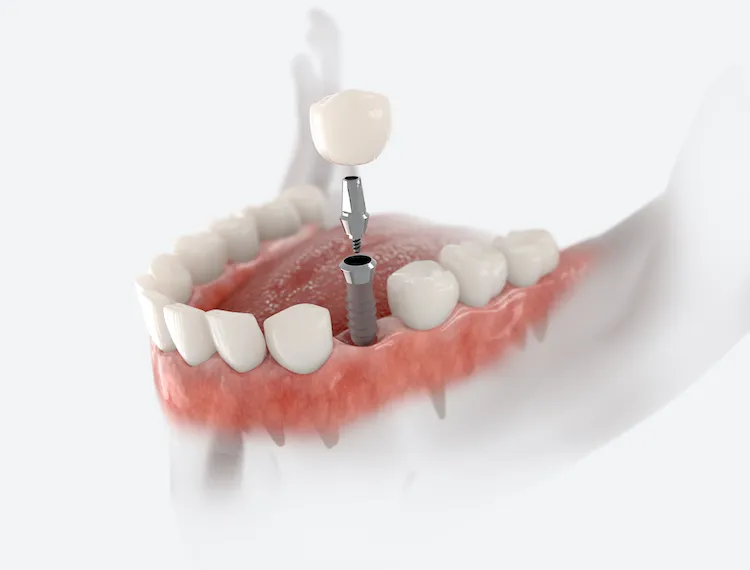
A dental implant takes a completely different approach. Instead of leaning on your other teeth for support, an implant stands on its own. Dr. Ryan Holmes places a small titanium post directly into your jawbone, right where your tooth used to be. This post actually fuses with the bone over time through a process called osseointegration. The fusion creates a foundation that is every bit as strong as a natural tooth root.
Once that’s healed and integrated, we attach a crown on top. The result is a replacement tooth that looks, feels, and functions independently. No relying on neighboring teeth and no shaving down healthy enamel.
Because implants are placed in the bone, they feel more natural than bridges. Patients tell us they forget they even have an implant. It just feels like their own tooth.
Why Patients With Bridges Are Making the Switch
We’ve had many patients come to our Fort Wayne office after living with a bridge for ten, fifteen, or even twenty years. They’re surprised to learn how much implant technology has advanced. Dr. Holmes has completed advanced training at the prestigious Kois Center in Seattle, where he studied the latest techniques in restorative dentistry, including implant placement and restoration.
Here are the reasons patients tell us they are glad they made the switch:
Easier Cleaning
With a bridge, you usually need special floss threaders and techniques to clean underneath. Food can get trapped under the bridge, leading to decay on the supporting teeth. With an implant, you brush and floss right up to it just like a regular tooth. It simplifies your whole routine.
Bone Health
Your jawbone needs stimulation to stay strong. Natural teeth provide that stimulation when you chew. So do implants. Bridges sit on top of the gums, so the bone beneath that missing tooth slowly begins to resorb, or shrink.
Implants prevent bone loss, which helps maintain your facial structure and keeps you looking younger longer. Over time, bone loss from a bridge can lead to a sunken appearance around the mouth. Implants preserve your natural facial contours.
Longevity
A well-maintained bridge typically lasts 10 to 15 years. With good care, implants can last a lifetime. They are an investment in your long-term health. While the upfront cost of an implant is higher, the long-term value often makes it the more cost-effective choice.
Protection of Adjacent Teeth
Because an implant doesn’t rely on neighboring teeth for support, those teeth remain untouched. You preserve your natural enamel and avoid placing extra stress on healthy teeth. This can help maintain your overall oral health.
Improved Comfort
Bridges can sometimes trap food or feel bulky. Implants feel like natural teeth. There’s no discomfort from a poorly fitting bridge or irritation from floss threaders. Patients report a more comfortable, natural experience.
How to Know If You’re a Candidate for an Implant
If you are considering switching from a bridge to an implant, here are some factors we evaluate:
- Bone Density: Do you have enough bone to support an implant? If you have been missing a tooth for a long time, bone loss may have occurred. We offer bone grafting to build up the bone if needed.
- Gum Health: Are your gums healthy? Gum disease needs to be treated before implant placement.
- Overall Health: Certain medical conditions may affect healing. We will review your medical history to ensure implants are safe for you.
- Your Goals: What do you want out of your tooth replacement? We will help you weigh the pros and cons based on your specific situation.
If you have been living with a bridge for years, you may still be a great candidate for an implant. Dr. Hoyt brings deep expertise in restorative dentistry and can help you understand your options.
What to Expect If You Switch to an Implant
Making the switch from a bridge to an implant typically involves:
- Consultation and Evaluation. We will examine your smile, take X-rays, and discuss your goals. We will evaluate your bone density and gum health.
- Treatment Planning. We will create a personalized plan that outlines the timeline and cost. We will answer all your questions.
- Implant Placement. Dr. Holmes surgically places the titanium post into your jawbone. The procedure takes about 1-2 hours. You are comfortably numb throughout.
- Healing. Over the next 3-6 months, the implant fuses with your bone. You may wear a temporary tooth during this time.
- Crown Placement. Once healed, we attach your custom crown. Your new implant tooth is complete.
The process takes several months, but the result is a permanent, natural-looking tooth that can last a lifetime.
Insurance and Financing Options
We accept most dental insurance plans and are in-network with Delta Dental Premier. Many plans cover a portion of the cost of implant treatment. We will verify your benefits and explain your out-of-pocket costs before any treatment begins.
If you don’t have insurance, ask about our in-house dental savings plan. We also accept CareCredit with low- or no-interest options.
Is It Time for a Conversation?
Maybe your current bridge is starting to feel its age. Maybe you are just curious about your options. Either way, the best next step is to speak with someone who can look at your specific situation.
Dr. Holmes and Dr. Hoyt take a patient-centered approach to these discussions. They will examine your smile, talk with you about what is working and what is frustrating you about your current bridge, and walk you through what an implant would actually involve in your case.
You can look forward to honest, expert guidance from a team that has been caring for Fort Wayne smiles for over twenty years.
If you’re wondering whether it’s time to upgrade that bridge, give us a call at 260-530-5489 or schedule an appointment online. Your smile deserves the best care possible.